Free shipping on orders $58+

The Truth About Red Light Therapy Masks: Do They Actually Improve Your Skin?

The Truth About At-Home Red Light Therapy Mask
Are LED face masks just another beauty trend, or is there real science behind the glow?
If you’ve spent any time on social media lately, you’ve probably seen them—celebrities, influencers, and even your neighbor down the street strapping on what looks like a sci-fi mask and emerging with radiant, glowing skin. From Kim Kardashian to Nicola Coughlan, everyone seems to be jumping on the red light therapy bandwagon.
But here’s the question: Does it actually work, or is this just clever marketing?
After diving deep into clinical studies, user testimonials, and speaking with dermatologists, here’s the honest truth about red light therapy masks—what they can do, how long they take, and whether they’re worth your money.
Let me give you the short answer upfront: yes, red light therapy is not a scam. But it’s also not magic. It’s science—and science takes time.
How It Actually Works: The Biology Behind the Glow
Red light therapy works through a process called photobiomodulation—a fancy term that basically means “light changes cell behavior.”
Your Skin Cells Have Tiny Power Plants
Inside every cell in your body are structures called mitochondria. Think of them as tiny batteries that power everything your cells do—producing collagen, repairing damage, fighting inflammation.
Red light (specifically wavelengths between 630-660 nanometers) penetrates your skin and gets absorbed by these mitochondria. Specifically, it interacts with an enzyme called cytochrome c oxidase, which is like the “on switch” for energy production.
When red light hits this enzyme, it supercharges your cells’ ability to produce ATP—the energy currency of your body. More energy means your skin cells can finally do the jobs they’ve been slacking on: building new collagen, repairing UV damage, and calming inflammation.
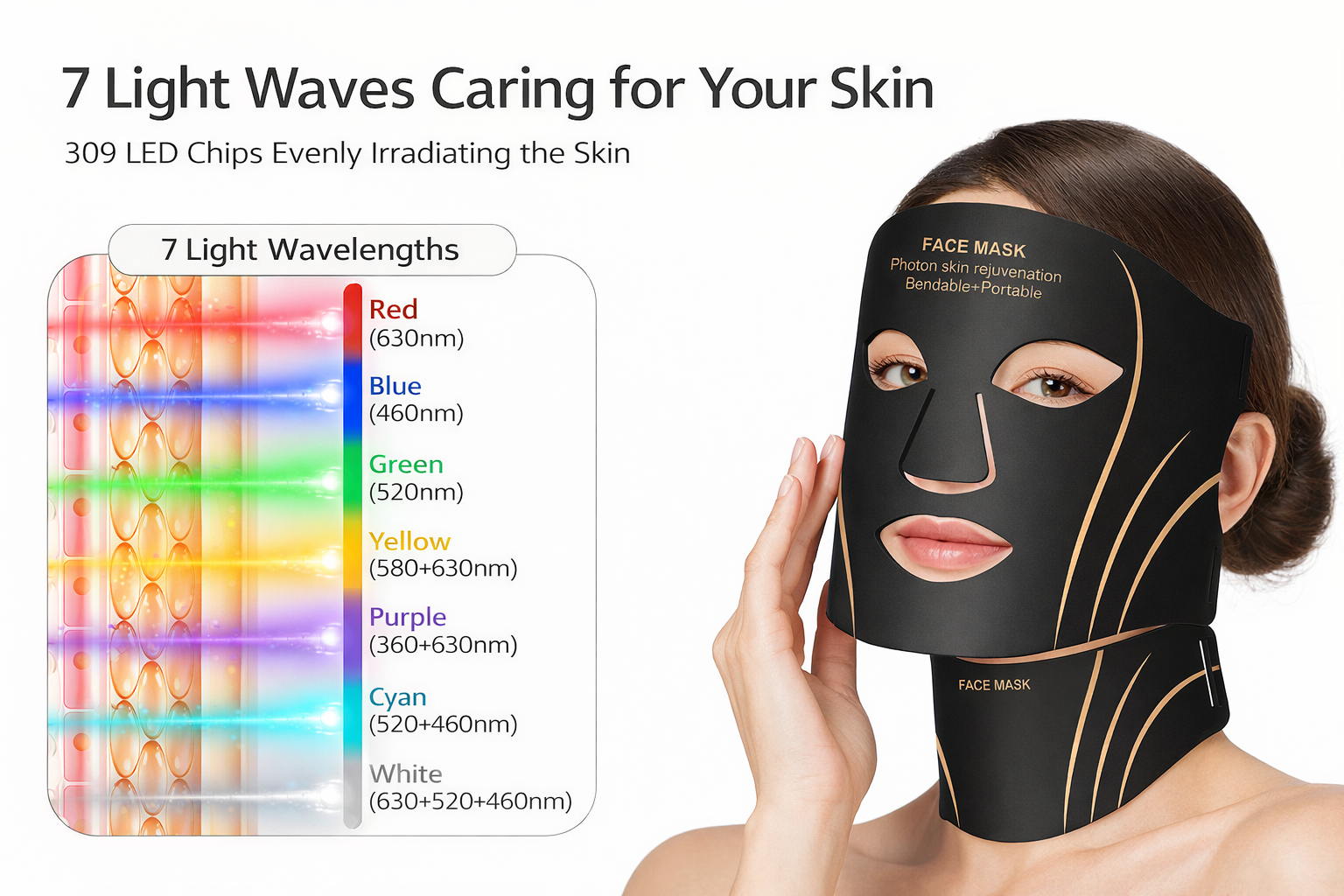
Different Colors, Different Jobs
Not all light is created equal:
Red light (633nm) : Penetrates the top layers of skin. Boosts collagen, reduces fine lines, improves circulation
Near-infrared (830nm) : Goes deeper, reaching muscles and deeper tissues. Reduces inflammation, accelerates healing
Blue light (415nm) : Kills acne-causing bacteria. This is your anti-blemish weapon
Many of the best masks combine multiple wavelengths so you get the benefits of all three at once.
The Biphasic Dose Response: More Isn’t Better
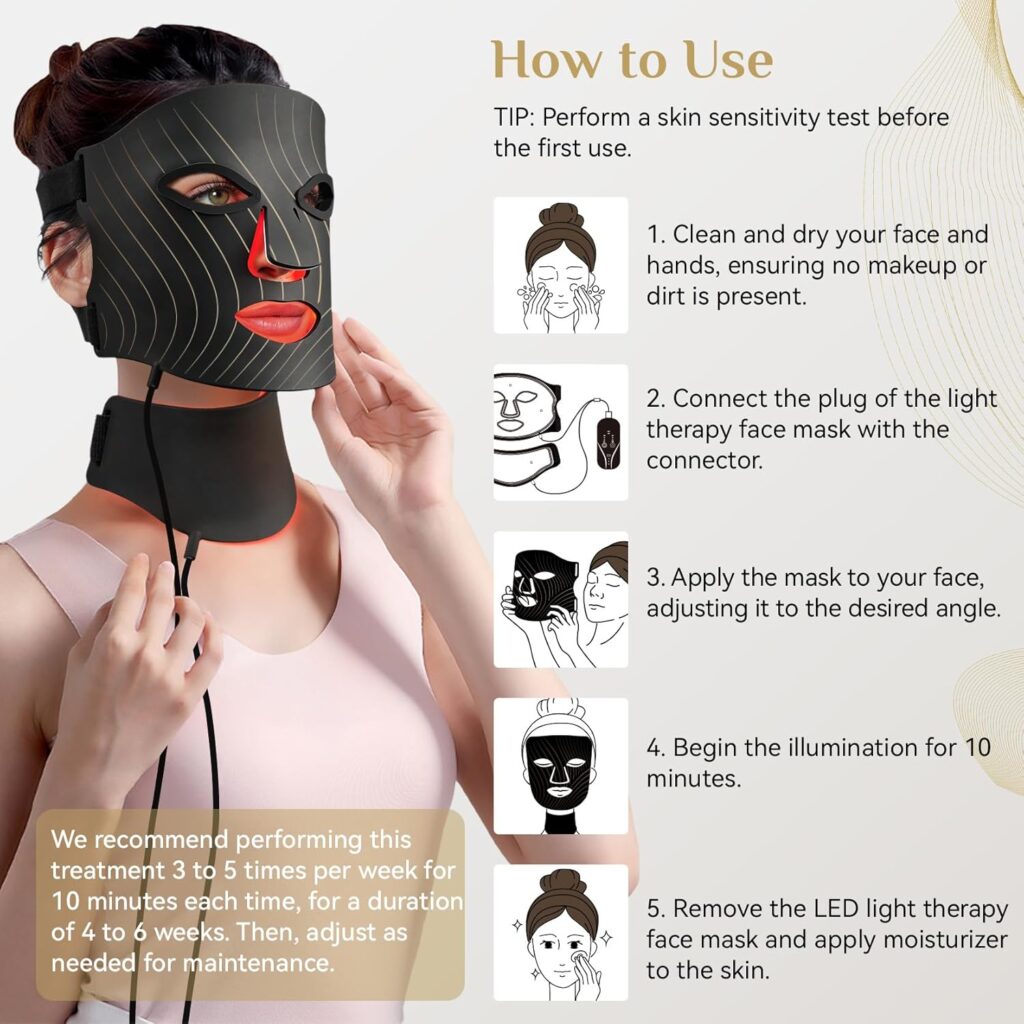
Here’s a counterintuitive fact: Using a red light mask for too long can actually make it less effective and it’s recommend using them only 3-6 times per week, each time 10-20minutes
The evidence increasingly says yes. Multiple FDA-cleared masks have now published peer-reviewed studies showing statistically significant improvements in wrinkles, tone, texture, and acne.
If you are interested, you can check out our 7-color red light therapy mask.